The width of Zlatibor
Where do the borders of Zlatibor end?
Zlatibor has no boundaries! That's it
Nature's path to faith
The heavens declare the glory of God; the firmament proclaims the work of His hands! Ps19.1
Mountain Zlatibor is one of the most beautiful tourist destinations in Serbia, known for its crystal clear air, picturesque landscapes, preserved tradition, cultural and historical heritage, and rich spiritual content.
Its true width is not in kilometers but in the vicinity of Heaven, which can be felt at every step.
May you be able to comprehend with all the saints what is the breadth, length, height, and depth of God's love. Eph3.18
Guide to the Zlatibor Trails
Your faithful companion through the Zlatibor trails is the Zlatibor Guide . This section has been created as a database of practical information for every traveler who wants to explore Zlatibor smartly, safely and responsibly. Whether you need a hiking map, information on where to buy authentic cheese and kajmak directly from the village doorstep, or are looking for advice on the best time to visit certain sites – our Guide is here to make your journey easier.
We want to help you experience the mountain with all your senses, respecting the nature that nourishes and hosts us. Zlatibor trails are not just roads on the ground – they are signposts that lead to memories that will last a lifetime. Go ahead, find your way through the heart of Zlatibor.
Pillars of Zlatibor
Three pillars of Zlatibor
Zlatibor is not just a collection of villages and glades; it rests on three fundamental pillars that define its past, present, and future. These pillars are the fulcrums that maintain the balance between urban development, administrative power, and untouched spiritual wilderness.
Zlatibor
Royal town and mountain center
Zlatibor (formerly Kraljeva Vode and Partizanska Vode) is the first pillar and symbol of prosperity. It all started on August 20, 1893, when King Aleksandar Obrenović erected a fountain at the Kulaševac spring, officially laying the foundation for organized tourism. This spring, today known as the King's Fountain , still stands as a symbol of the royal recognition of the healing properties of this mountain. The second major impetus was given by King Petar I Karađorđević in 1908, when he erected the first buildings on the Palisade and Oka rivers. Today, this pillar represents the urban heart of the mountain - a place where global tourism trends intersect with traditional Zlatibor hospitality. The lake in the center , which has been a symbol of the settlement for decades, has been completely reconstructed and shines with a new shine, but its essence remains the same: it is a mirror of the mountain. This pillar also includes the Eye, a place of historical victory and spiritual silence at the memorial fountain, where the view extends towards the Sušica canyon. Zlatibor as a center is the driving force behind the development of the entire region, a point that attracts rivers of people, offering them healing air that doctors prescribed as the best medicine for the recovery of soul and body back in the 19th century.
Chajetina
Administrative heart and guardian of civic identity
Čajetina is the second pillar of Zlatibor, its intellectual and administrative center. While the settlement of Zlatibor is the center of tourism, Čajetina is the center of life. It is a small town that acquired its civic status back in the 19th century, thanks to its location on an important trade route. Čajetina is a Pillar that guards institutions – from the “Ljubiša R. Đenić” Library , which is one of the oldest and richest in western Serbia, to the Cultural Center that nurtures Zlatibor song, dance and crafts. Here is the Temple of the Holy Archangel Gabriel , built in 1890, which with its architecture and iconostasis testifies to the spiritual strength of the Čajetina people. The town has always been the home of Zlatibor educators, judges and hosts who governed the mountain with wisdom and caution. The specificity of Čajetina lies in its blend of traditional Serbian architecture and modern development, where every decision is made with the preservation of Zlatibor's identity in mind. As the administrative center of the municipality, Čajetina is a pillar of stability that has allowed Zlatibor to grow and develop for centuries, while remaining true to its roots.
Murtenitsa
A natural and spiritual bastion
Nemanjić endowments is the third, most powerful and most mystical pillar of Zlatibor . It is a huge mountain massif that rises above the Uvac canyon and represents the “back” of the mountain. Murtenica is the Pillar of Survival; its dense pine forests have been the only safe haven for people and outlaws throughout history. With its peak Brijač (1480m), it is a geographical pivot that controls the roads to the south and west. Murtenica is not just a forest; it is a spiritual space where the monasteries of Uvac and Dubrava are hidden, the resurrection foundations of the Nemanjićs that hold the vertical of the Serbian faith. This mountain is the source of Zlatibor’s kirijaštvo – caravans with arrack and tar set out from here. It is the guardian of ecological purity, a bastion from which the purest mountain rivers flow and where the song “izvika” can still be heard in its original form. Murtenica is a pillar that reminds Zlatibor of its wild, unruly and sacred nature, without which the mountain would be just a beautifully landscaped park. It is the soul of Zlatibor, hidden in the scent of resin and the silence of the canyon.
North gate of Zlatibor
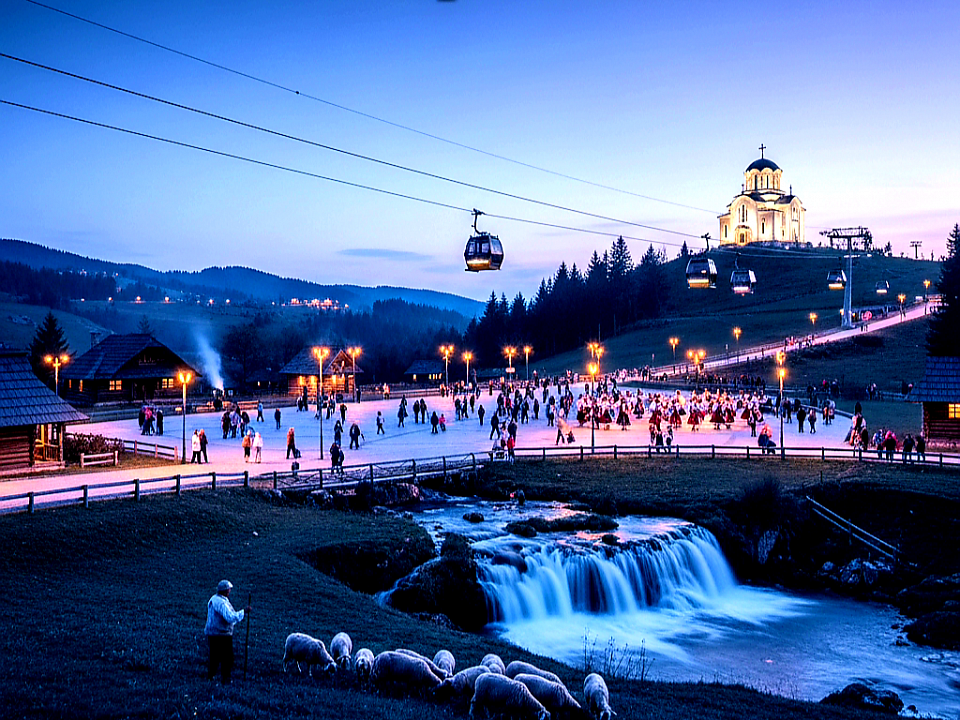
A rampart of heroism, the smell of dried meat and artisan villages
The northern gate of Zlatibor is the first encounter with mountain hospitality and a landscape that defines the economic and military power of Zlatibor. Here, the mountain massif rises abruptly above the Užice valley, creating a natural border that for centuries separated the free mountaineers from the conquerors. This gate is the home of the “Zlatibor bayonet”, the homeland of the tenants who carried the glory of the mountain to the world on horseback, and a place where the wind roses intersect, creating a unique climate that has turned an ordinary village into the world capital of cured meat delicacies.
Cat
The capital of prosciutto and the homeland of indomitable soldiers.
Mačkat is the economic heart of the Northern Gate of Zlatibor and a village synonymous with the highest quality beef and pork prosciutto in the Balkans. The secret of this village lies in its specific location at 850 meters above sea level, where Mediterranean and mountain winds meet, creating ideal conditions for natural drying of meat on beech wood. Every family in Mačkat, from Šopalović to Stojanović, has kept a recipe for centuries that is not written down, but inherited. Mačkat is also a spiritual stronghold; the Church of St. Elijah from 1859 preserves the memory of the time when this village was a strategic defense point. Famous officers and soldiers who brought glory to the Zlatibor “ Fourth Regiment ” came from Mačkat, and their courage is woven into the foundations of this town. Today, Mačkat is a blend of modern entrepreneurship and old tradition, a place where " Pršutijada " is celebrated and where every guest is welcomed with a full meal and true respect.
Kriva Reka
The hiding place of the nobility and the homeland of wise hosts
Kriva Reka is one of the oldest villages on the mountain, which owes its name to its watercourse that cuts through the rocks, making surreal bends. Throughout history, this village has been known as a refuge for Serbian noble families who sought salvation here during the great migrations. Kriva Reka is today a village of large and wealthy households, recognizable by its vast pastures and livestock, which is among the strongest in Serbia. The spiritual center of the village is the Church of the Transfiguration of the Lord from the 19th century, which dominates the landscape with its slender silhouette. The village exudes peace and security, and its residents are considered the best experts in mountain meteorology – people who know what the year will be like from the movement of the clouds above Murtenica. Kriva Reka is the Pillar of Stability of the Northern Gate of Zlatibor , a place where the word still holds stronger than any contract.
Tripkova
The village of glass, art and lake silences
Tripkova is a specific pearl of the Northern Gate of Zlatibor , located on the edge of the mountain overlooking the Đetinja River canyon and Lake Vrutci . This village gained world fame thanks to the artistic family Vesović and their workshop for handmade art glass (Tiffany technique), which put Tripkova on the map of the most important craft centers in Europe. Tripkova is a region where nature and art intertwine in the most unique way - the view of the lake that flows below the village gives this area a Mediterranean note in the heart of the mountain. The village is also known for the preserved architecture of old houses with stone basements, and the locals are famous for their gentleness and openness to artistic expressions, making this part of Zlatibor a place where spirituality is experienced not only through temples, but also through the beauty of creativity.
Plum brandy
A treasure trove of the best Zlatibor brandy
Šljivovica is a village at the Northern Gate of Zlatibor, named after the most famous Serbian drink, and its history is inextricably linked to fruit growing. Here are the oldest orchards of Zlatibor's " red grape ", from which brandy has been made for centuries and has served as both a medicine and a means of trade. Šljivovica was an important stop on the road that tenants used to travel to Mokra Gora and Višegrad. The village also houses the Gallery of Wooden Sculptures by Miladin Lekić , a self-taught master whose figures of Serbian peasants and highlanders represent the best illustration of Zlatibor's identity. The spiritual life of the village is linked to small chapels and votive crosses in the fields, and Šljivovica is still considered the village where the most beautiful toasts are made and where every glass of brandy is a toast to life and longevity.
Braneshci
Railway and caravan route gate
Branešci is a strategic point of the Northern Gate of Zlatibor , located in the valley through which the Belgrade-Bar railway passes. For centuries, the village has been a gathering place for merchants and artisans. What sets Branešci apart is the preserved nature in which gentle glades and dense forests alternate, but also the fact that the people of Branešci have been considered the best stonemasons of this region throughout history. Their hands have shaped many temples and fountains throughout Zlatibor. The spirit of old roads can still be felt in the village, and the proximity of the main road makes them the first hosts for every traveler who wants to get to know the real Zlatibor outside the tourist centers.
Musvete
A hidden oasis where old secrets still live on
Mušvete is perhaps the quietest village of the Northern Gate of Zlatibor , nestled in a lee between hills that protect it from strong winds. Throughout history, this village has been known for its beekeeping and a specific type of honey made from mountain flowers. Mušvete is the homeland of people who have lived in harmony with nature for centuries, using every spring and every medicinal herb. Recently, the village has become recognizable for the first Zlatibor prosciutto factory , which began producing delicacies according to the highest world standards, combining ancestral traditions with the modern era. Mušvete is proof that the Northern Gate of Zlatibor is not just a passage, but a place where the future of the mountain is forged in peace and quiet.
West gate of Zlatibor
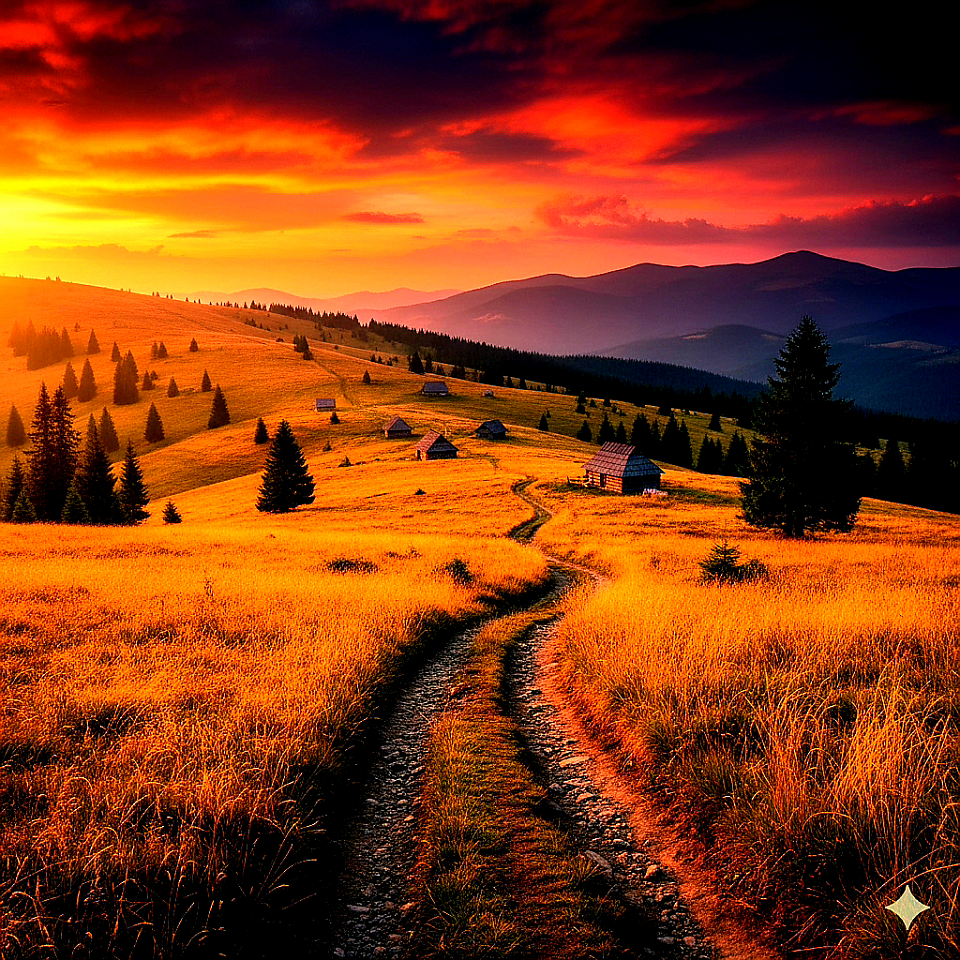
The kingdom of century-old pines, the secret of the log cabin and canyon spirituality
The western gate of Zlatibor is a land of silence, tall forests and the deepest river canyons. While the center of the mountain is turned towards urban life, the western slopes have remained a refuge for those seeking primordial peace and spiritual strength. This gate leans against the Tornik massif, leading travelers towards the Uvac canyon and the Bosnian mountains, following the paths that have been walked by tenants, Dubrovnik merchants and hermits for centuries. It is a space where faith was carved in wood, and life was measured by the strength of the pine beam.
Jablanica
An architectural masterpiece and the homeland of architects
Jablanica is one of the largest villages in Serbia in terms of territory, a true kingdom of black pine after which this region was named. Its central pillar is the Church of the Protection of the Most Holy Theotokos , built in 1838. This log church is the largest and most monumental in the entire Zlatibor, built from huge black pine planks that craftsmen carved with only an axe. What sets Jablanica apart is the fact that the church was built without a single iron nail — everything is connected with wooden wedges, which is proof of the incredible skill of local carpenters. Around the church are authentic "sobrašice" or "rodovi", small wooden houses where families stayed during major holidays, preserving the unity and covenant of their ancestors. Throughout the centuries, Jablanica was the homeland of the best kirijaše who transported Zlatibor tar and tar on horses all the way to Belgrade and Thessaloniki. Today, this village stands as a guardian of tradition, where the scent of pine resin mingles with prayer, offering the visitor a glimpse into what life was like when man built both house and church directly from the heart of the forest.
Semegnjevo
Cradle of legends and mountain lakes
Semegnjevo is a region of unreal beauty, located on the border with Mokra Gora , where mountain pastures merge with dense conifers. The name of the village comes from the time when settlers, fleeing persecution, stopped on this plateau and said: "Here let us sow the seeds of anger", vowing to resist and survive in freedom. The village is known for its healing springs and the fact that it has always been a place where people came to heal their health in the fresh air. The specificity of Semegnjevo are the stream-fed mills, some of which still grind grain in the same way as two hundred years ago. A special attraction is the mountain lakes and the Skakavac waterfall , which in spring, when the snow melts from Murtenica , thunders with its power through the forest. The spiritual life of the village is crowned by the Church of Saint John the Baptist, but the true sanctuary is nature itself, which breathes with full lungs here, attracting all those who want to escape the city bustle to an oasis of absolute peace.
Stem
Lighthouse of faith in the Uvac canyon
The village of Stublo is the guardian of the southwestern border of the mountain and the place where one of the most important spiritual centers of this region is located - the Uvac Monastery . Dedicated to the Nativity of the Blessed Virgin Mary , this monastery has shared the fate of the people for centuries; demolished to the ground and rebuilt, it is a symbol of the resurrection of the Zlatibor spirit. Stublo is specific for its rocky areas that abruptly fall towards the meanders of Uvac, creating an environment reminiscent of the cliffs of Mount Athos. The residents of Stublo have been known for centuries as "border guards" who guarded the river crossings, and their endurance is woven into every stone of this harsh land. The road to this village is a journey through history, where you can still see the remains of old caravan routes and hear stories about prophecies that foretold the restoration of the monastery after three centuries of silence. Stublo is a place where the silence of the canyon merges with the power of prayer, creating a bridge between earth and heaven.
Fishpond
The mystique of black pines and their lost history
Ribnica is a region that exudes a special energy, located at the foot of Tornik itself. This place was named after a clear river that once abounded in fish, and today it is best known for the Ribnica Lake , the main source of drinking water for the entire mountain. However, Ribnica hides much deeper secrets - in its forests and under the water of the lake there are remnants of ancient history and churches that were gathering centers for centuries. Throughout history, this area has been a favorite vacation spot for Serbian rulers , who came here to hunt and seek refreshment in the dense black pine forests. Today, Ribnica is a blend of modern and traditional; while the longest gondola in the world sails above it, the peace of centuries-old trees still reigns in the valley. The Crni Rzav River, which flows through Ribnica, reflects the color of the pine forests with its dark bottom, creating a landscape that looks as if it came out of the most beautiful epic poems.
Mokra Gora
The connection of two worlds
Although Mokra Gora is an independent entity, it is inextricably linked to the Western Gate of Zlatibor . It was through this part of the mountain that the narrow-gauge railway, the famous " Šarganska osmica ", passed, connecting the East and the West. The connection of Zlatibor with Mokra Gora through Semegnjevo and Jablanica makes this region a transport and cultural bridge. Nature here becomes even wilder, with numerous springs of healing water (such as Bela voda ) which are believed to help with eye diseases. This part of the Western Gate of Zlatibor is proof that borders on the mountain do not exist, but that they are connected by forests, rivers and people who have shared the same fate for centuries under the canopy of the sky and tall pine trees.
Tornik
Royal Headquarters of the West
Tornik , with its highest peak of 1496 meters, is not only a ski resort but also a geographical and geological pillar that watches over the Western Gate of Zlatibor . It is the oldest point of Zlatibor, composed of ancient rocks that testify to the formation of the mountain. Historically, Tornik was the main observation post from which every movement through the Rzava Valley was controlled. The strongest winds come from its slopes that clean the air of the entire mountain, making it a spa. For the inhabitants of Jablanica and Ribnica , Tornik is a mountain-nourishment, a source of wood, grass and medicinal herbs, but also a mountain-protector whose massive silhouette instills security and pride in every Zlatibor resident.
East gate of Zlatibor
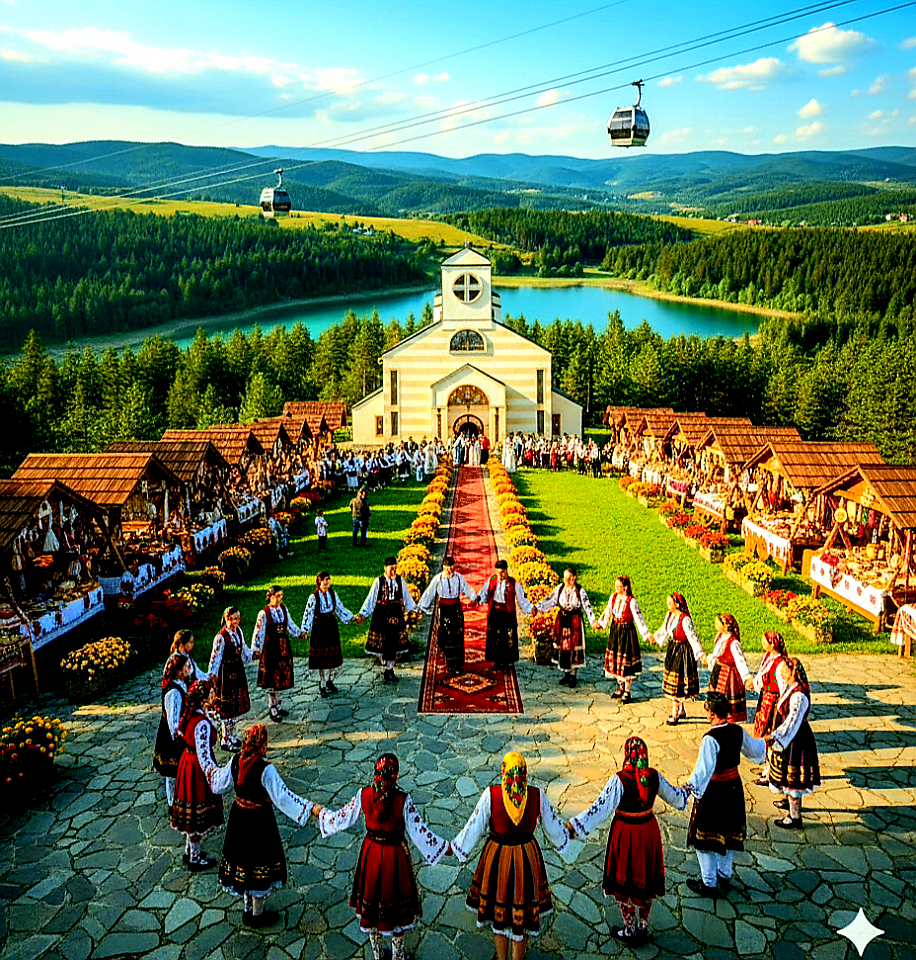
Spiritual vertical, treasury of architecture and waterways
The East Gate of Zlatibor represents a region where the combination of folk art, old architecture and mystical nature is most strongly felt. This is the direction that leads to Sirogojna , a world of stone and wool, and descends to the fertile valleys watered by the Prištavica and Katušnica rivers. The East Gate of Zlatibor is the guardian of folk tradition, a place where iconographers depicted eternity, and nature carved the most beautiful halls and waterfalls in stone.
Infertile
The capital of Serbian ethno-spirit and iconographic mastery
Sirogojno is not only the most famous village in Zlatibor; it is an institution that preserves the identity of the Serbian highlanders. The heart of the village is the Church of the Holy Apostles Peter and Paul , built in 1764. This sanctuary is a key point of Serbian cultural heritage because it preserves the iconostasis of Simeon Lazović , the first great Serbian icon painter from this region. His icons represent a refined blend of traditional Byzantine canon and Baroque influences of the time, making this temple a true gallery under a dome. Right next to the church gate is the Open-Air Museum "Old Village" , a unique complex that preserves over 50 authentic objects transferred from the surrounding hamlets on five hectares. Here, every log house, every vajat, milkman and potter tell the story of a family cooperative and a way of life that has disappeared, but has remained "preserved" here for eternity. Sirogojno also gained world fame through its knitters , whose wool sweaters with mountain landscape motifs reached Paris and Tokyo, showing that raw Zlatibor wool can be woven into an art that knows no boundaries.
Relatives
A treasure trove of cooperage and healing waters
Rožanstvo is a village that carries in its name the symbolism of birth and eternal renewal. Historically, it was known as the strongest craft center of the Eastern Gate of Zlatibor , especially for the production of wooden containers for dairy products — the famous "brem" and vats. Master coopers from Rožanstvo were known even to the coast, and their skill in taming oak and pine wood was passed down from generation to generation. A special natural pearl of the village is the Vapa spa , with springs of healing water that erupts from the ground at a constant temperature, and which according to popular belief is "balm for the eyes and skin". In the immediate vicinity is the famous Stopića cave , which, although territorially belongs to the outskirts of the village, with its monumental entrance and "siphons" — cascading limestone tubs — represents the greatest natural attraction of this part of Serbia. Rožanstvo is also home to families that have preserved archaic "scream" singing for centuries, the oldest form of musical expression that is under the protection of UNESCO.
Hostel
A waterfall that brings legends to life and the homeland of scholars
Gostije is a region where water rules the roost. The village is world-famous for its waterfall on the Vrelo River , where water cascades from a height of 20 meters over limestone rocks, creating a sight that seems unreal. According to legend, it was here that mountain fairies gathered, and the power of the water powered the numerous mills and cloth rollers that once powered this region. Gostije also gave Serbia Dimitrij Tucović , one of the first socialists from the early 20th century, whose birthplace still stands today as a witness to civic consciousness in the heart of the mountains. The spiritual center of the village is the Church of the Holy Great Martyr Dimitrij , which, with its slender silhouette and carved stone crosses, preserves the memory of the families who moved here from old Herzegovina , bringing with them a strong faith and customs that are still strictly observed today.
Trnava
Hidden cave and vows
Trnava is a village that connects central Zlatibor with its eastern slopes . It was named after the thorn that once served as a natural fence, but today Trnava is synonymous with fertile orchards and pastures. A special attraction of this region is the Trnava or Stopića Cave , which hides halls with stalactites in its interior that resemble characters from folk epic poems. For centuries, the spiritual life of Trnava was tied to small log churches that were often burned down throughout history, but the locals always rebuilt their shrines. Trnava is today known for its art colony that gathers artists every summer, continuing the tradition of Zlatibor icon painters who created their first works on wood here in the 18th century. The village exudes a peace that only a mountain lee can provide, making it an ideal place for those seeking spiritual recovery.
Alin Potok
The mysticism of stone and pine forests
Alin Potok is one of the most beautiful high-altitude villages of the Eastern Gate of Zlatibor , where pine trees dominate the landscape. The village is famous for its springs of crystal clear water that gushes out of rocky crevices, which locals say has the power to restore strength to a weary traveler. The architecture of Alin Potok is specific - the houses are built with a combination of stone basements and log cabins with high roofs made of "shingles". Throughout history, the village has been a stop on the caravan routes , and its residents were considered the best connoisseurs of medicinal herbs. The spiritual connection of this village with the nearby monasteries in the canyons makes it part of the sacred ring of Zlatibor. In Alin Potok, time seems to have stood still, and hospitality is still measured by the traditional " bread and salt " offered to everyone who passes this way.
Rudine
A lookout point to eternity and a guard over the canyon
Rudine occupies a strategic position at the Eastern Gate of Zlatibor , from which a view extends not only to the entire Zlatibor , but also to the distant massifs of eastern Serbia . It was named after the “rudine” — mountain pastures that are ideal for sheep and cattle. For centuries, Rudine was the first point of contact for trade caravans entering the mountain from the Morava Valley . The village is home to numerous “ krajputaši ” monuments, stone obelisks erected to warriors whose graves are unknown, and which, with their symbols and inscriptions, tell the history of the heroism and suffering of this region. Here, nature is harsh, the winds are strong, but the people are steadfast and faithful to their roots, making Rudine an unbreakable part of the eastern border of the mountain .
South gate of Zlatibor
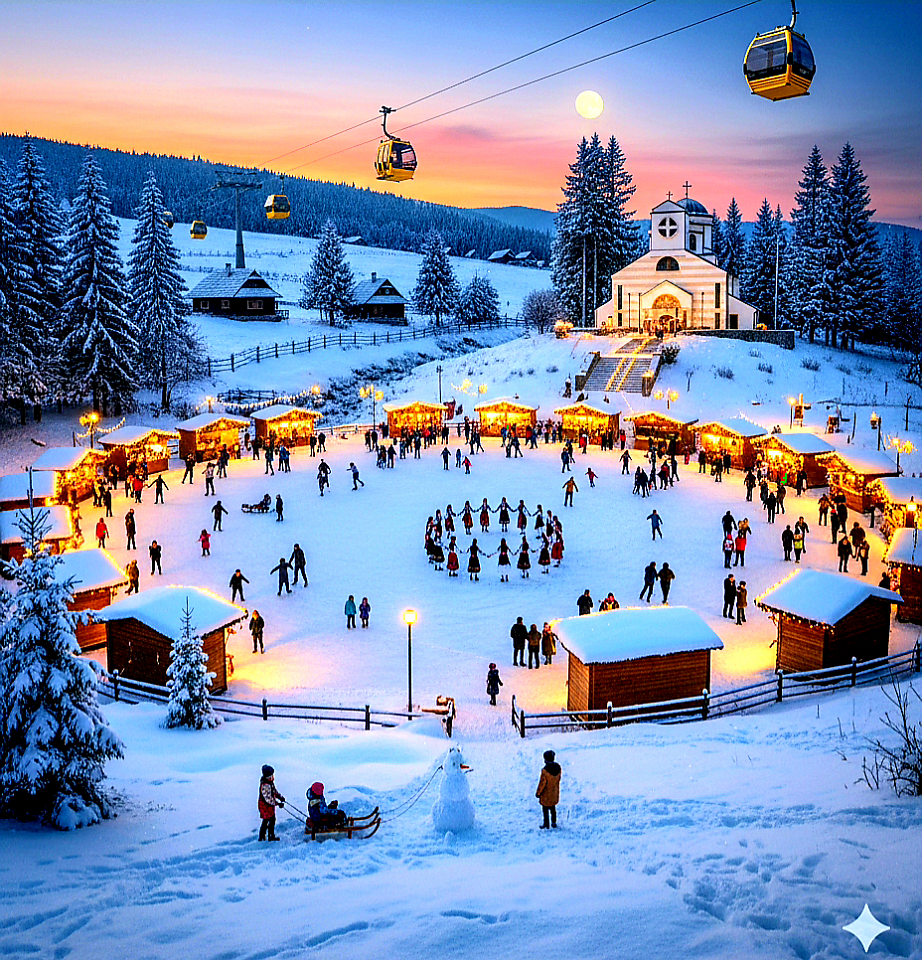
Guarding the canyons, homeland of the wise and untouched treasury of the ancestors
The southern gate of Zlatibor is a region where the mountain shows its harshest, but also its most sacred face. This is a space that leans against the Murtenica Pillar , forming an unbreakable shield towards Stari Vlach and the canyon of the Uvac River . In these villages, time does not flow by the clock, but by the season, prayer and vows of the ancestors. They have remained hidden from the modern world for centuries, preserving the authentic Zlatibor soul in its purest form.
You kiss.
Valley of wise heads, poetry and clear rapids
Ljubiš is much more than a village; it is a symbol of Zlatibor's vitality. Located in a deep valley carved out by the Ljubišnica River, where the " Trout Days " are held every year. This area has produced some of the wisest Serbian minds. It is also the birthplace of our greatest children's poet, Ljubivoj Ršumović , who " learned the school of nature " right here.The village is divided intoUpper andLower Ljubiš , and its architecture testifies to a homely attitude towards the land. The trout ponds here are world-famous, because the water that comes from mountain springs does not have a single trace of impurity. The spiritual center of the village is the Church of Saint Emperor Constantine and Empress Helena from 1924, built on the site where folk assemblies were held for centuries. Ljubiš is also the homeland of famous warriors and the greatest military leaders in Serbian history, people who defended their doorsteps with rifles in their hands, and after the wars returned to plant orchards that still produce the sweetest Zlatibor plums today. One of them is the commander of the " Drina Division " , General Krsto Smiljanić .
Draglica
The rampart above Uvac and the gate of the Peace of Chilandar
Draglica stands on the edge between mountain pastures and the dizzying cliffs of the Uvac canyon . Throughout history, this village has been the most strategically important point of the Southern Gate of Zlatibor . The spiritual station of Draglica is closely linked to the Church of the Holy Trinity , and for centuries the residents of Draglica were also the first guardians of the Uvac and Dubrava monasteries , protecting monks and hiding places during difficult times under the Turks. The village is known for its specific microclimate that allows the cultivation of mountain rye and oats at heights where little else thrives. The people of Draglica are known as people of their word – sharp as the stone of the canyon, but soft as the moss of Zlatibor towards a guest who is well-intentioned. The most beautiful hiking trails lead from this village, descending to the river, passing through areas where the golden eagle still rules the sky. Every house in Draglica has its own small "museum" of tradition, preserving stories about the outlaws who carried news of freedom across the canyon.
Goodwill Ambassador
The village of the sacred pine and film mysticism
Dobroselica is a living open-air museum. Its name testifies to the good people who settled here, seeking shelter under the slopes of Murtenica . The log church of the Holy Prophet Elijah , with its “shingled” roof and low doors, is one of the oldest religious buildings in this area (built in 1821). In front of it stands the famous “ Zapis ” pine, a tree that is sacred above all sacred things for the people of Dobroselica – under its canopy, fates were decided, marriages were made and prayers for rain were said. This village has also attracted the greatest Yugoslav directors, who filmed their masterpieces here, recognizing in Dobroselica that primordial, cinematic Zlatibor that is slowly disappearing. Each garden here is arranged like a gallery, connecting the stone foundation with the pine, creating a symphony that enchants everyone who visits the Southern Gate of Zlatibor .
Household
A treasure trove of iconographic treasures in a small package
Kućani is remote, quiet and hidden, but it preserves one of the greatest treasures of Zlatibor. In the hamlet of Peta, there is the smallest log church dedicated to the Nativity of the Blessed Virgin Mary . Although small in size, it is a giant in its importance, because it preserves the imperial doors painted in 1745 by Simeon Lazović . These are the oldest preserved works of this giant of Zlatibor iconography. Throughout the centuries, the village of Kućani has been a refuge for artists and clergymen who sought peace far from the Turkish roads. The inhabitants of this village are known for their skill in woodworking - the best Kyrija saddles and wooden utensils were made here. Life in Kućani is simple, focused on nature and prayer, making this village the spiritual center of the Southern Gate of Zlatibor , a mountain that reminds us of modesty as the greatest virtue.
Negbina
Guardian over the lands and the land of heroes
Negbina is a village located on the border between the mountains and the plains, a place where the winds break and where every inch of land is paid for with heroism. A great caravan route passed through Negbina, and the village was famous for its inns and rest areas. The nature of Negbina is harsh - here the winters are the longest and the winds are the strongest, which has given birth to people of steel character. The people of Negbina have been known throughout history as top builders and stonemasons, and their works can be seen on old houses throughout western Serbia . This village is still an important hub today, a place that connects Zlatibor with Nova Varoš and Lim , retaining its authentic strength and defiance towards all the changes brought by the modern era.
White River
Source of strength and homeland of the duke
Bela Reka is a village that owes its name to its river that foams white over the rocks, bringing coolness from the highest mountain peaks. Throughout history, this place has been the center of Zlatibor cattle breeding , known for its herds that numbered thousands of heads. Bela Reka is still the place where the highest quality dairy products are made, because the grass that grows here is abundant in medicinal herbs. The village exudes an almost sacred tranquility, with old cooperatives that remind us of the time when the family was sacred and when people lived under one roof in harmony and respect. In Bela Reka , on the right bank of the Bela Reka stream, which is famous for its caves, at the very entrance to the gorge, there is the Church of the Transfiguration of Christ . Based on its architectural characteristics, it is assumed that it was built in the first half of the 12th century.
Attractions on Zlatibor
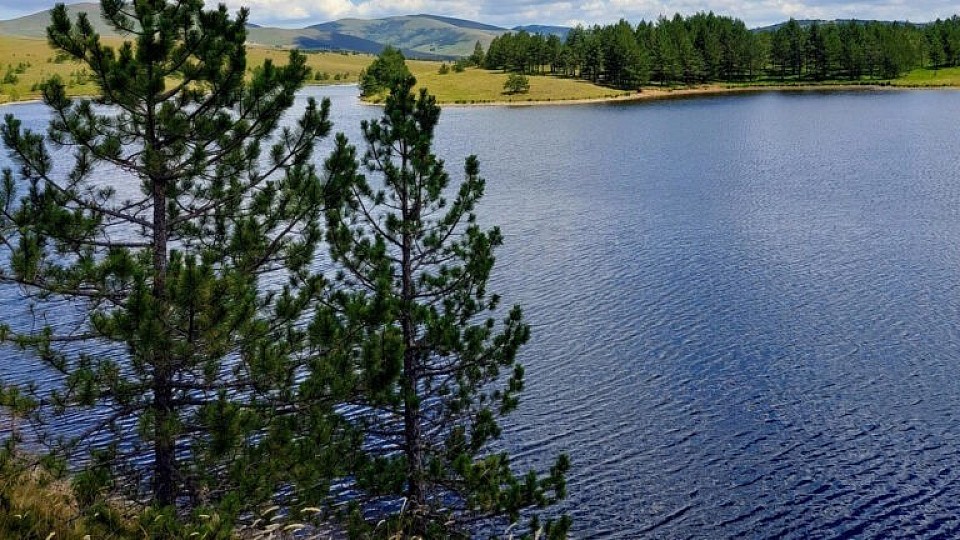
Zlatibor Fish Pond Lake
Ribnica Lake
About 8 km from Zlatibor is this artificial lake, about 2 kilometers long. It was created in 1971 by damming the Crni Rzav River near Ribnica, in order to supply the settlements of Zlatibor and Čajetina with drinking water. It is rich in various species of fish, and the color of the lake comes from the dark stones on its bottom, while the lake is surrounded by a coniferous forest.
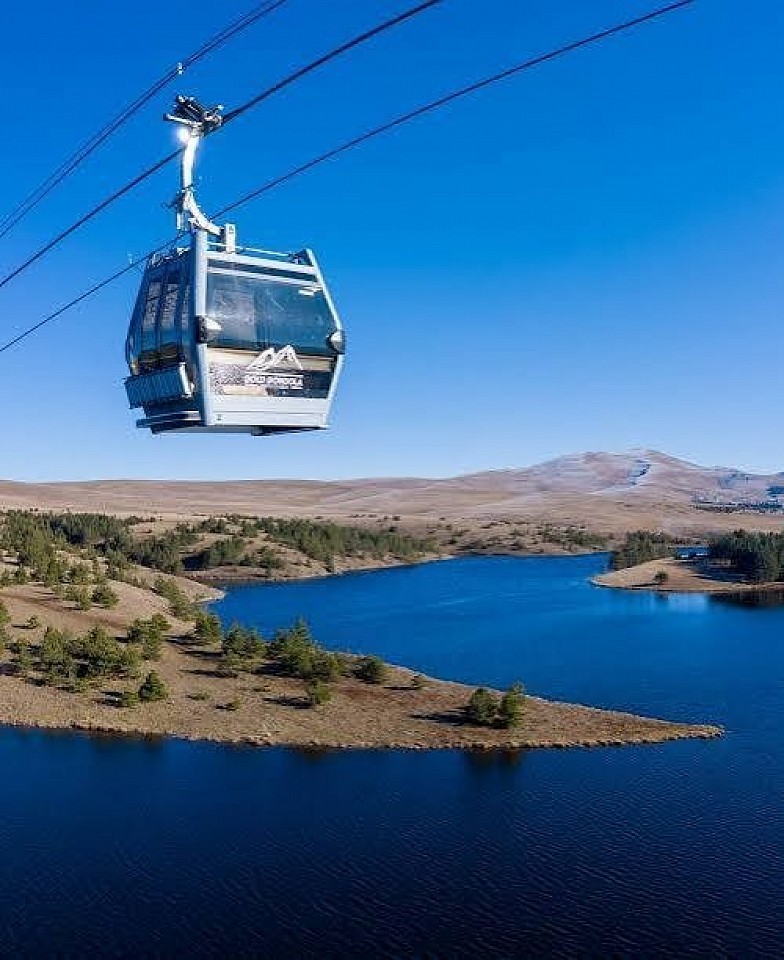
The intermediate station is the Gold Gondola and is located halfway to the top of Tornik. When you get off at the intermediate station, walk down to the lake and enjoy the sound of water and the smell of conifers.
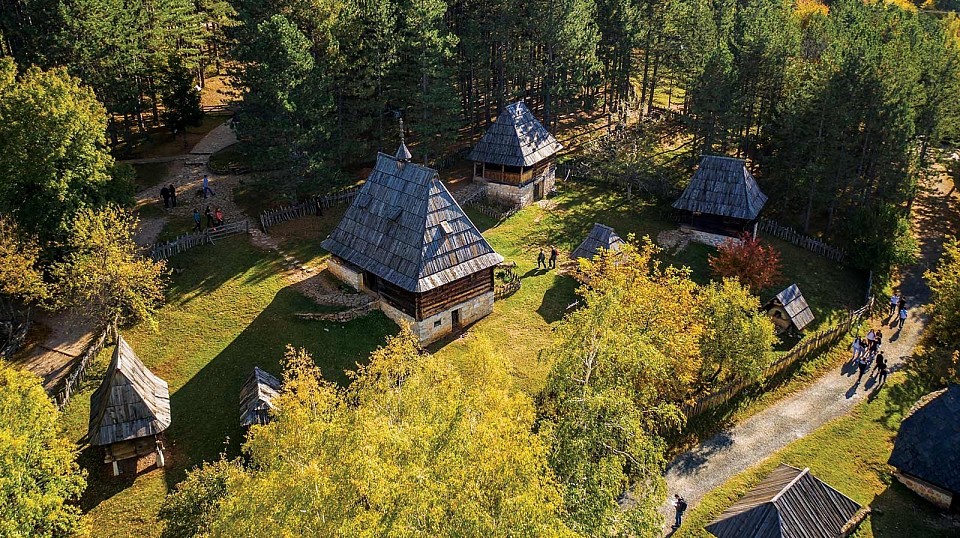
Open-air museum Old village Sirogojno Zlatibor
"Old Village" Sirogojno
" Old Village" Sirogojno is an open-air museum that displays the architecture, interior design of buildings, the way of earning a living and the organization of family life of the people of the hilly and mountainous areas of the Dinaric region. The Ethno Village Sirogojno is a unique open-air museum that presents the traditional material and spiritual heritage of the Serbian village. The buildings are authentic and furnished as in the old days with about fifty original Zlatibor log cabins and over two thousand exhibits. For the numerous visitors of the Museum, a special complex of buildings for rest, respite and refreshment has been created. The museum is open every day and over 100,000 people pass through it annually.
The museum is located on five hectares of space and in facilities that preserve the spiritual heritage of the Serbian village of the mountainous region. The exhibits are displayed in the ethno village, apartment accommodation in log houses, a souvenir shop with a tavern, leaving an unforgettable impression and wonderful memories that visitors take with them from Sirogojno.
Sirogojno is also widely known for its knitwear and sweaters.
Sirigojno - Open-air museum
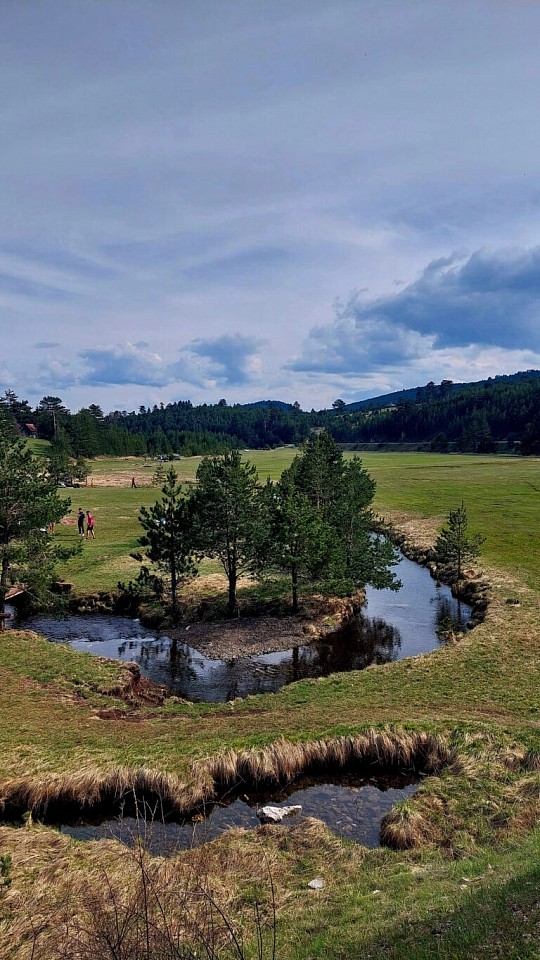
Vodice Zlatibor picnic area
Vodice picnic area
The settlement of Vodice is 10 km from the tourist center of Zlatibor, and belongs to the village of Dobroselica. It can be reached by the main road to Nova Varoša and Montenegro. It is divided by the Crni Rzav River, and on its left side is a favorite picnic spot for locals, but also tourists visiting Zlatibor, because on this side nature has remained untouched.
Tall white pine trees, vast expanses and flower meadows, intersected by the meanders of the Crni Rzav River, are a true oasis in the surroundings of Zlatibor, where you can enjoy peace and enchanting nature.
The Vodice picnic area is especially popular during the May Day holidays, where many people decide to go there for a morning walk, and then enjoy music and entertainment all day long, until sunset.
The stunning beauty of these landscapes is also evidenced by the fact that the landscape of this settlement is one of the most common motifs on postcards from Zlatibor.
As for parking, there is no organized parking lot, but along the road, in several places, there are extensions where you can park and then take a few steps down to the picnic area.
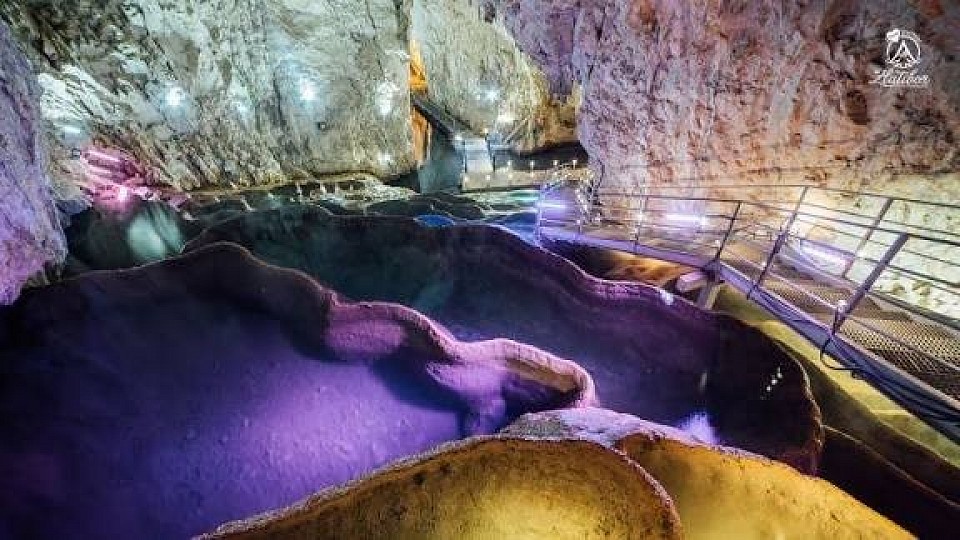
Stopica Cave Zlatibor
Stopica Cave Zlatibor
The river cave, through which the Trnava Stream flows, is one of the most famous caves in Serbia and is a natural monument, a protected natural asset of exceptional importance.
It is located between the villages of Rožanstvo and Trnava , on the road to Sirogojno , and is about 25 kilometers from Zlatibor. Stopića Cave consists of five parts: the Light Hall, the Dark Hall, the Great Hall with Baths, the Canal with Baths and the River Canal. It is famous for its turquoise baths, formed by the deposition of limestone, which, with the combination of light and water, make the scene magnificent.
There is a parking lot near the Stopića cave, and then a well-maintained path takes you to an imposing opening that represents the entrance to the cave. The temperature inside the cave is lower, so don't forget to wear something with long sleeves even in the summer months.
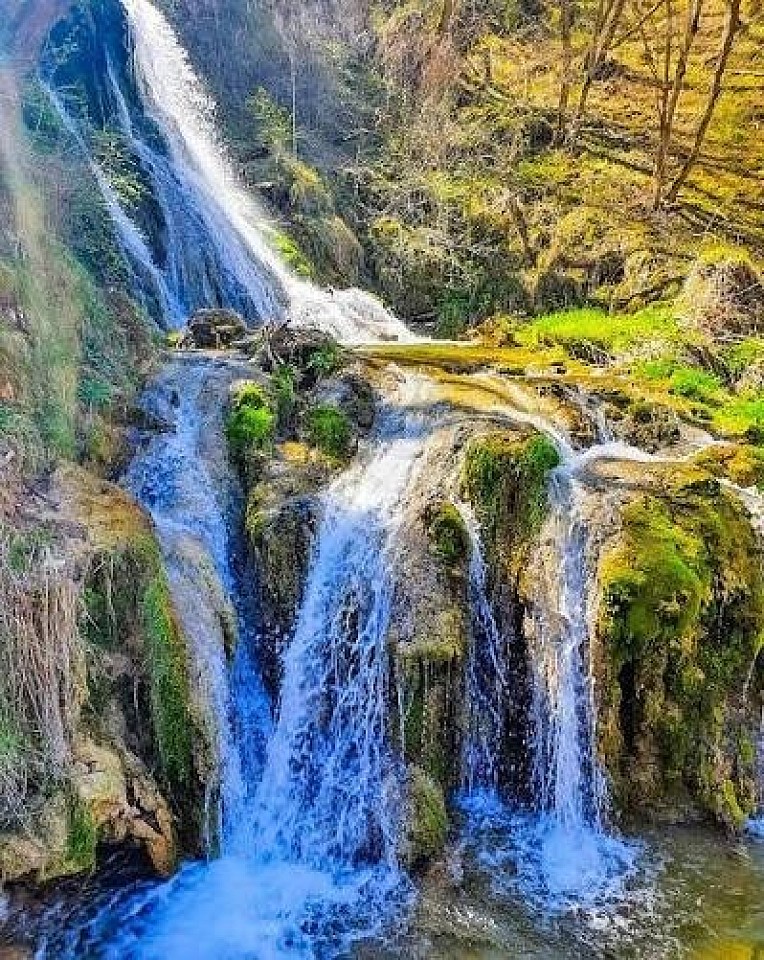
Gostilje Waterfall Zlatibor
Gostilje Waterfall
In the village of Gostilje , on the Gostiljska River, 25 km from Zlatibor, are the Gostilje Waterfalls.
The first in the series is the highest, about 22 meters high, and downstream from it, you can visit several smaller waterfalls and cascades on a well-maintained path, all the way to the confluence of the Gostiljska River and the Katušnica River. There is also a children's playground within the waterfall viewing area, and horse riding is also possible. During the summer months, it is a real pleasure to walk by the waterfall and feel the freshness of the water and air.
In front of the entrance to the waterfall viewing area, there is a spacious free parking lot, where you can also buy tickets, and nearby there is a football field and a swimming pool, as well as a restaurant, so this beautiful place is ideal for spending the whole day here.
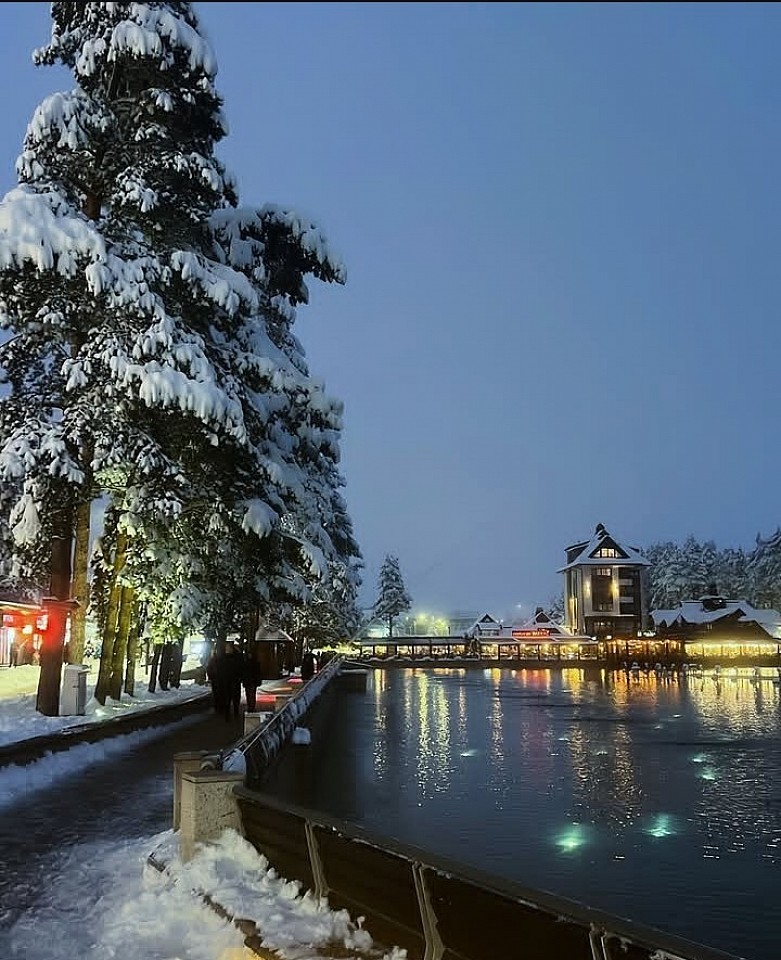
Zlatibor Lake
Zlatibor Lake
On Zlatibor , all roads lead to the lake. In the very center, in the Kraljeva Voda part, there is an artificial lake, the symbol of Zlatibor . It was built in 1947, it is 150 meters long and 50 meters wide.
There is a paved walking path and benches around the lake, and there are a couple of restaurants on the lake itself, which, in addition to food and drinks, offer you a beautiful view of the lake with the sound of water from the fountains.
It is an equally beautiful experience in the summer, in the sun, when the restaurant's gardens are open, as well as in the winter, when you enjoy the view of the frozen lake from the comfort and warmth of the restaurant.
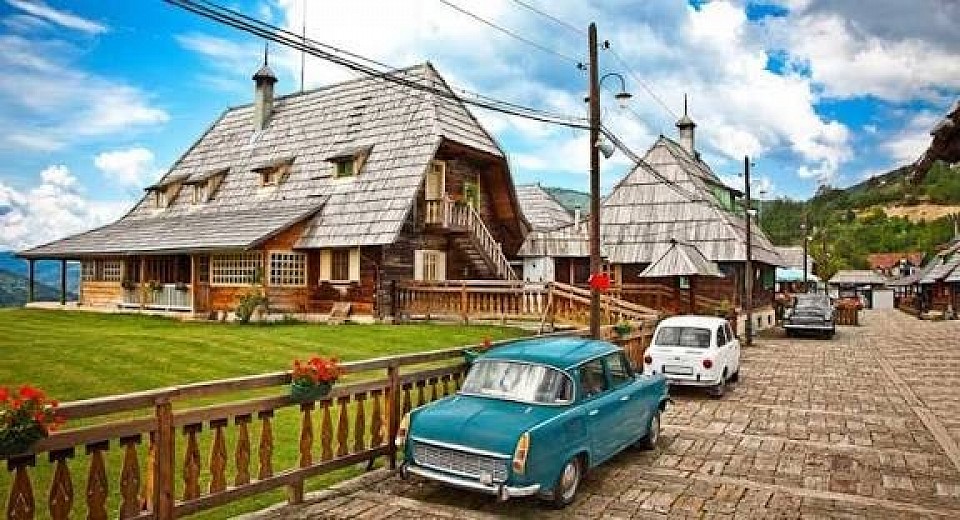
Drvengrad - Mećavnik
Drvengrad - Mećavnik
Drvengrad is an ethnic village built by our famous film director, Emir Kusturica . It was built on the Mećavnik hill, a kind of mountain island above which several larger hills extend. Because of the place where it was built, some people also call this ethnic village Mećavnik. Mećavnik got its name from the large snow drifts that form here during the winter.
As the name suggests, in this ethno village, everything is built of wood. The wooden log houses attract special attention. There are over 50 of them in the village, and most of them are authentic because they were brought from the surrounding Zlatibor villages, so they are the best witnesses to the way of life and architecture of this region.
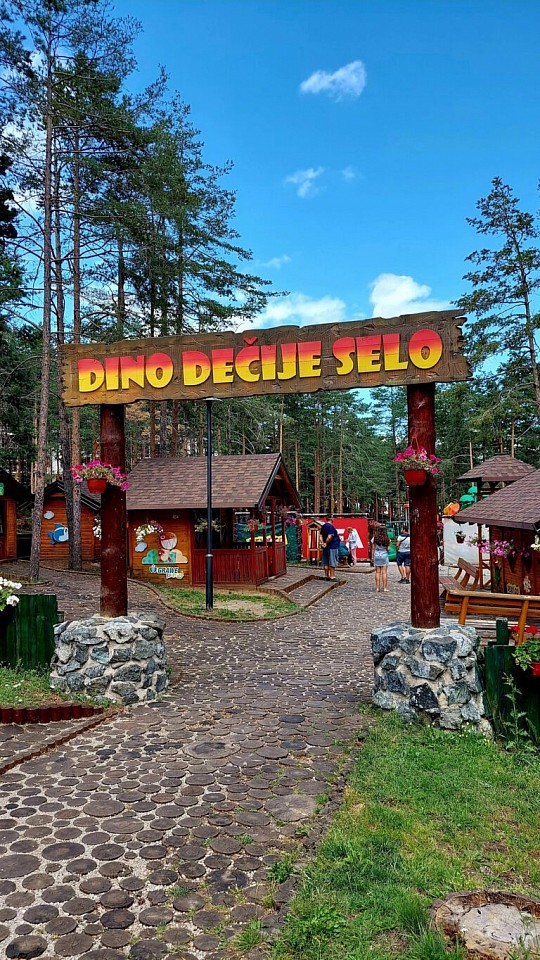
Dino Park Zlatibor
Dino Park
Just a few minutes from the strict center of Zlatibor , visitors will be surprised by an unexpected sight: the long neck of a dinosaur rising from the greenery of a pine forest. If they decide to follow the call of the unusual beast, visitors will feel as if they have stepped into another world, a world still walked by prehistoric giants. Dino Park Zlatibor is a place where learning and fun meet, which will delight the youngest adventurers. There, they will be able to get to know twenty interactive dinosaur replicas that, with the help of the magic of modern technology, move and make noise.
In addition to hanging out with prehistoric beasts, the Dino Complex also has an Adventure Park section, which offers numerous other diverse activities, such as archery, artificial rock, horseback riding, a visit to a miniature zoo, quads, a rollerblading and scooter park, and a zip line for children and adults. Plenty of activities, greenery, shade, and, of course, dinosaurs promise great fun, both for tireless little ones and for those a little older who have kept the child inside them.
El Paso City Zlatibor
El Paso City
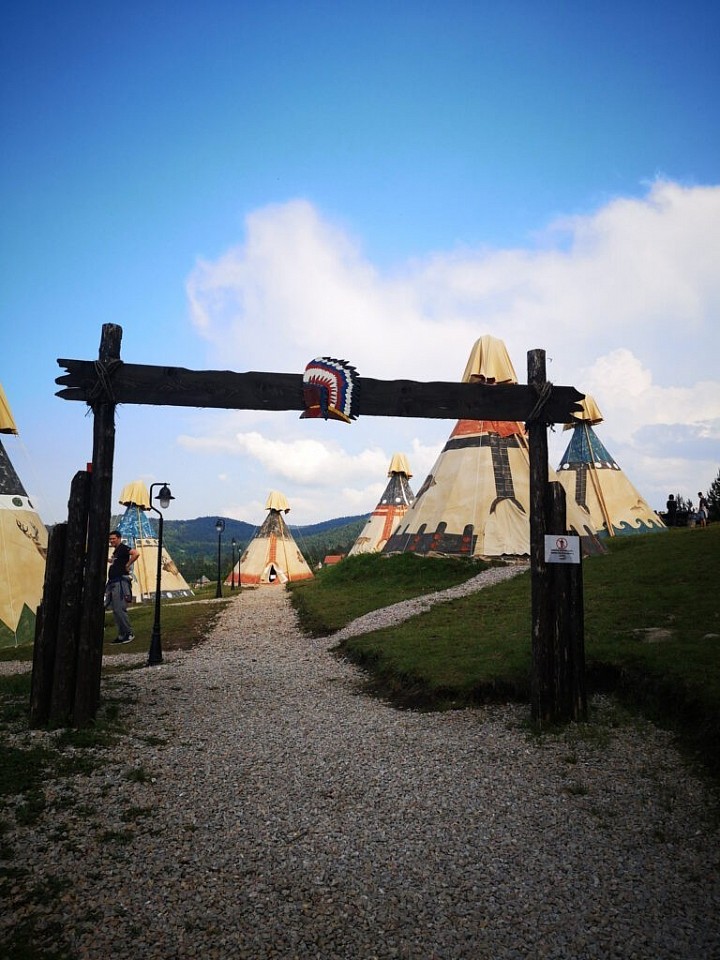
On the main road to Montenegro, 14 kilometers from Zlatibor , there is the theme park “El Paso City”. It was named after the city of the same name in the United States of America.
The park consists of several thematic areas:
replicas of a 19th century cowboy town in the Wild West, dominated by a hotel in the center, and here you can also see what the post office, prison, bank, sheriff's office looked like in that period... You will feel the real atmosphere of the Wild West, but also of real Texas, in the part where the caravans are set up; replicas of an Indian village - namely six Indian tents made around a campfire; where you will feel as if a real Indian chief is about to emerge from one of the tents, and a Zlatibor hamlet with a church, where the tradition of this region from the 19th century is presented, with a lake where trout are grown and with log cabins, which were named after a famous Serbian personality, whose image is on the log cabin.
The El Paso City Theme Park is located right next to the main road and has a parking lot in front of the entrance. There is an entrance fee, and you can find out about prices on their official website.
Gold Gondola Zlatibor
Gold Gondola
The nine-kilometer-long, state-of-the-art Zlatibor Gondola connects the center of Zlatibor with the Tornik ski center , across the Ribničko Lake , where the intermediate station is located. The Gondola currently has a capacity of 800 passengers per hour in 72 separate cabins with 10 seats each. The maximum capacity of the Gondola is 90 cabins and 1,000 passengers. The Gondola ride will provide an impressive 25 minutes with incredible views of the picturesque landscapes of Zlatibor.
Zlatibor viewpoints
Zlatibor viewpoints
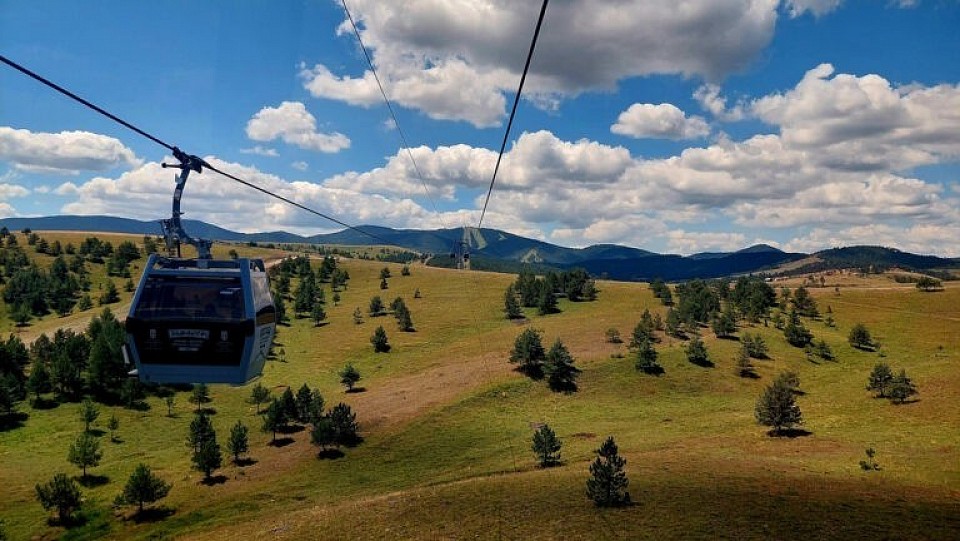
Tornik may offer the most distant view, but there are also less well-known viewpoints worth visiting. The Gradina viewpoint takes you 5km from the center of the mountain to 1,164m above sea level, where you will have a view of Čajetina, Tornik, Čigota and Viogor from a furnished summer house. Six kilometres from Zlatibor is the Obadovo Brdo viewpoint, which overlooks Tara, Braneško polje , Jokino vrelo and Šljivovica .
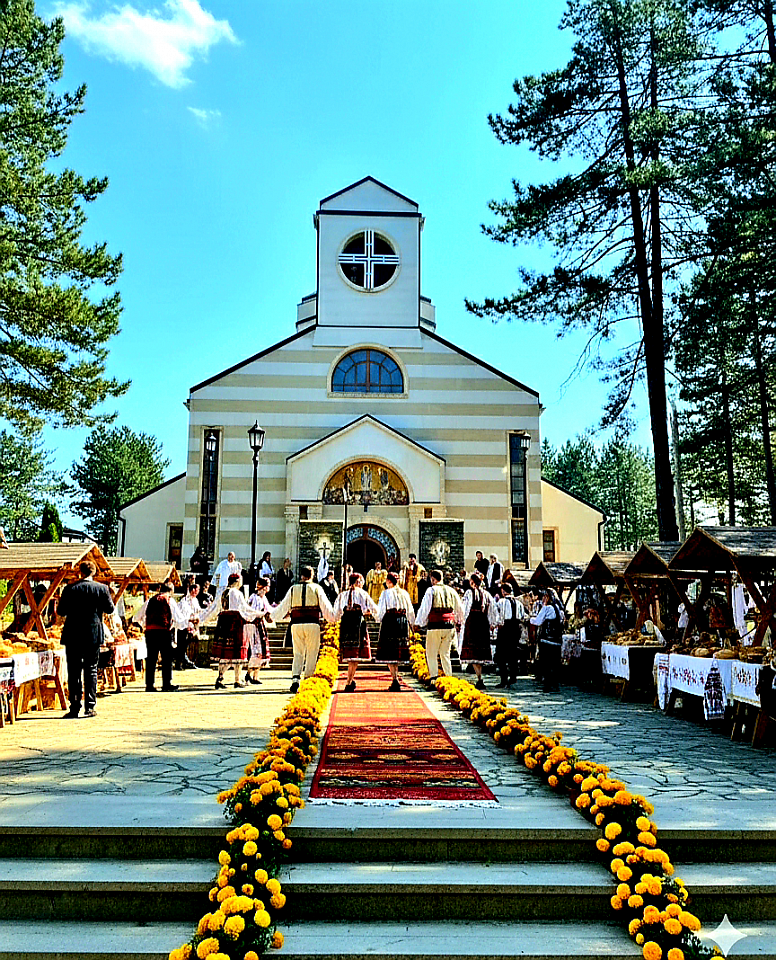
Church of the Holy Transfiguration of the Lord Zlatibor
Zlatibor is a combination of nature, tradition and spirituality
Important information
This section is a digital companion. Here you will find the numbers and information you may need at a moment's notice, whether you are in the center or in the furthest hamlet of Zlatibor.
Emergency services and security (24/7)
Emergency medical assistance: 194
Čajetina Health Center (General Service): +381313831222
Zlatibor Ambulance (Shopping Center): +38131841222
Čajetina Police Station: 192 (direct: +381313831202 )
Fire Department: 193
Mountain Rescue Service (GSS): +38162464646
AMSS Roadside Assistance: 1987
Electricity distribution: tel.: 0313831351
PUC Waterworks: tel.: 0313831805
KJP Zlatibor (Communal): phone: 0313832035
Municipality of Čajetina : tel.: 0313831151
Cadastre Service : phone: 0313831185
Tax Administration: tel.: 0313831907
Pharmacies and health
Galen Pharm Pharmacy (Center): Open every day until 9:00 PM.
Krsenkovic Pharmacy (near the market): On duty for most needs on the mountain.
Dentist: On-call service on weekends at the Čajetina Health Center (morning).
Official institutions and culture
Temple of the Transfiguration Zlatibor: Church in Zlatibor tel.: 031845626
Zlatibor Cultural Center (Cinema, theater and gallery)
Ljubiša R. Đenić Čajetina Library: bibliotekacajetina.org.rs tel. 0313831380
Diocese of Žička (Schedule of liturgies and monasteries): eparhija-zicka.rs
Sports Center Čajetina (Stadiums and halls): sc-cajetina.rs
Church of the Archangel Gabriel: Church Municipality of Čajetina tel.: 0313831953
Church of Peter and Paul in Sirogojno: Church in Sirogojno tel.: +381642222658
Kindergarten "Radost" Čajetina: 0313831360
Kindergarten "Narcis" Zlatibor: 031841552
Čajetina Cultural Center: 0313832014
Tourist organization Zlatibor (Info center): phone: 031845103
Manifestations and associations
Event calendar (Concerts, festivals, summer in Zlatibor): Current events Zlatibor
"Izvika" Assembly: Traditional Singing in Rožanstvo
"Pršutijada" Cold Cuts Fair: Mačkat (January/February)
Eco-agrar Čajetina (Local producers): ekoagrar.rs
Mountaineering Society "Tornik": Guided tours and trail maps.
Logistics and transportation
Zlatibor bus station: +38131841161
Taxi transportation:
Eco Taxi +38131845555 , Palma Taxi +381608481500
Gas stations: NIS Petrol and OMV on the main road. (Note: There are no gas stations in the villages)
ATMs: King's Square, Shopping Center and larger hotel complexes.
E-chargers: Hotel Mona, Hotel Tornik and the Gondola starting station.
Information about attractions
Gold Gondola: +38131630020
Stopića Cave: Opening hours in summer 09:30 – 18:00 (in winter until 16:30)
Old Village Museum Sirogojno : Working hours 09:00 – 19:00 (summer)
Sirogojno Knitting Museum : Opening hours 09:00 – 19:00 (summer)
Log Churches : To enter the buildings in Jablanica and Dobroselica, please contact the Didanović (Jablanica) or Kuzeljević (Dobroselica) families.
Important tips for traveling to the villages
Water: The fountains on the Oka (road to Semegnjevo) and Savina Voda (Čigota) are working properly.
Network: Mobile signal is very weak in Uvac Canyon and parts of Murtenica - Download offline maps
Supply: Markets in villages often work double hours. Do larger purchases in Čajetina or the center.
Nature: Lighting fires outdoors is strictly prohibited. Take all waste with you to the first container.
Nature's path to faith
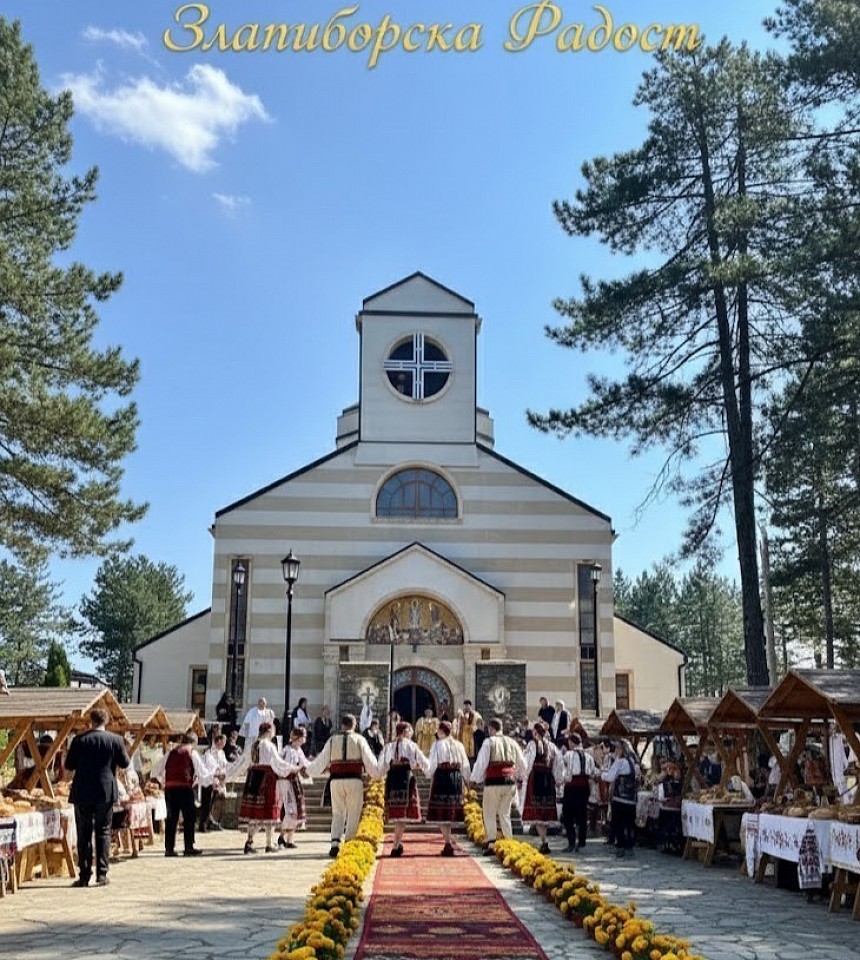
When you finish your journey through the Sirogojno Museum, the Gostilje Waterfall, the Vodice picnic area, or the Stopića Cave, come to the Church of the Holy Transfiguration to remember that:
" For every good gift and every perfect gift is from above, coming down from you, the Father of lights" (James 1:17).
In the Church of the Transfiguration of the Lord on Zlatibor, the following services are held:
- Holy Liturgy on Sundays and holidays at 9 a.m.
- Akathist to the Most Holy Theotokos the Comforter on Friday at 6 p.m.
- Akathist to Saint Nectarios of Aegina on Sunday at 6 p.m.
Visit the temple Ćaldov put bb, Zlatibor | Open every day 07:30–18:30
